Alterno Lawsuit: Court Evasion and Unverified Evidence in Vietnam (SAND - Part 18)
Following the July 2025 events detailed in Part 16, the legal proceedings over my wrongful termination by the remaining Alterno co-founders entered a new phase. Reading the record of that phase in strict chronological order, a pattern emerges — one that repeats three times over six months: submit documents that cannot be verified, stall when the court asks questions, and quietly work to dissolve the very company being sued. This post walks through that pattern, hearing by hearing.
The July 31st Hearing and Evidentiary Failures
A court date was set for July 31, 2025. During the proceedings, Alterno submitted multiple documents in support of their defense — but only as photocopies, despite an explicit official request from the court for originals. Several of the key documents showed internal inconsistencies of the kind later catalogued in Part 19, raising serious questions about their authenticity.
Under Vietnamese civil procedural law, unverified photocopies do not meet the evidentiary standard required for court acceptance. Here is what makes this detail significant: a party holding genuine originals has every incentive to produce them, because originals end the argument. Withholding them does the opposite — it forced further procedural reviews and set the cycle of delays in motion.
The Pattern of Procedural Delays and Illegal Dissolution Attempt
Following the July 31st hearing, the legal process entered a prolonged holding pattern. Between August and December 2025, the proceedings were repeatedly delayed. What the paper trail later revealed is that this quiet period was anything but idle.
During this period, I obtained an official dispatch (No. 2130/ĐKKD-THK1 dated September 19, 2025) from the Ho Chi Minh City Department of Planning and Investment (accessed January 8, 2026). This document confirmed a critical evasion tactic: on July 24, 2025—during the ongoing lawsuit—Alterno Vietnam JSC submitted a notice of resolution to dissolve the company. Their corporate status was subsequently changed to "Undergoing dissolution procedures."
This action stands in direct contradiction to Vietnamese corporate law. The labor dispute lawsuit had already been formally accepted by the court on March 20, 2025 (Notice No. 31/2025/TB-TLVA). According to Clause 2, Article 207 of the 2020 Enterprise Law, an enterprise can only be dissolved if it ensures full payment of debts and is not in the process of resolving a dispute at a Court or Arbitration.
January 2026: Second Court Evasion
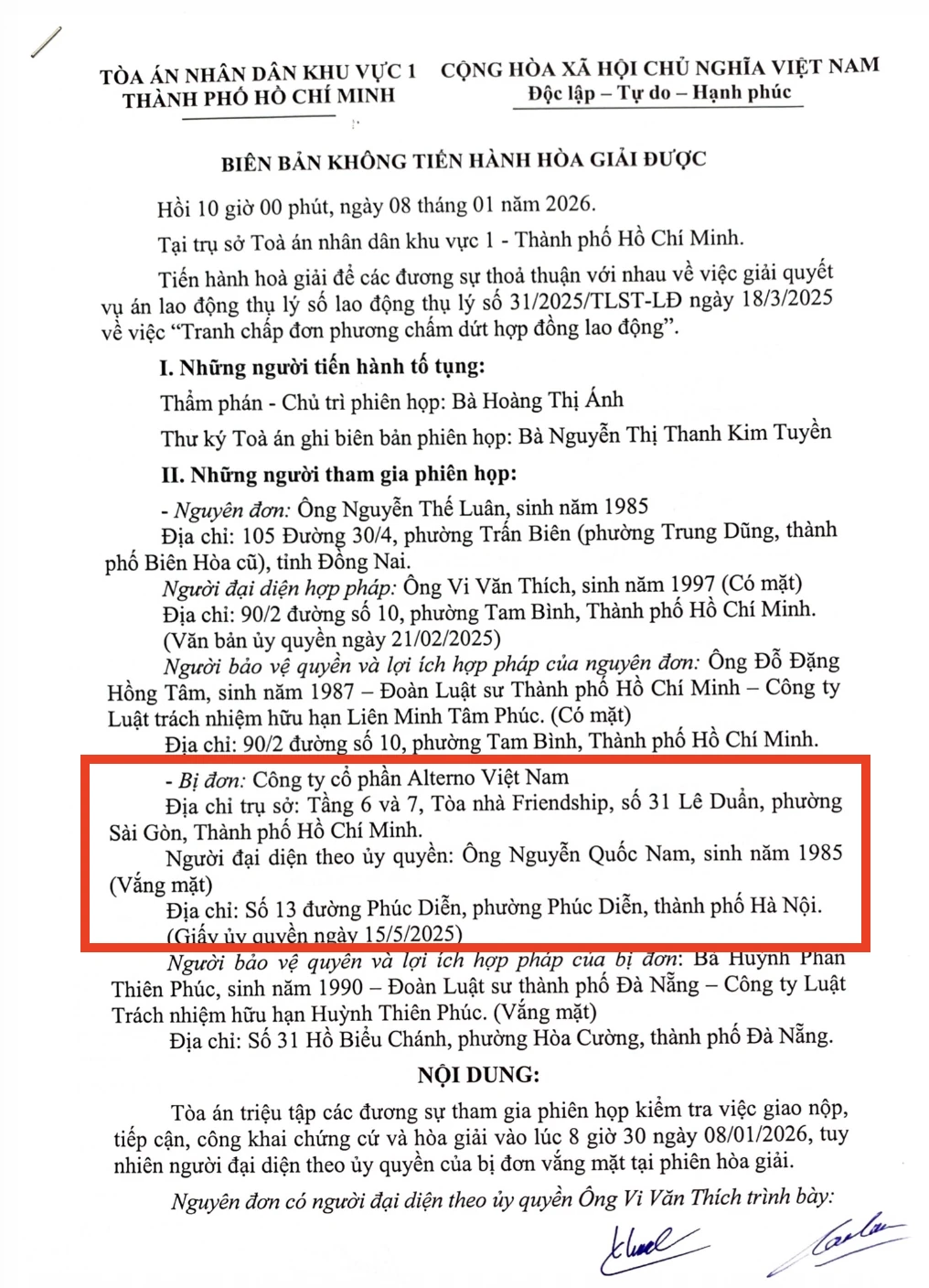
The cycle culminated early the following year. At the scheduled court session on January 8, 2026, Alterno Vietnam's legal representatives simply did not appear before the judge.
This marks the second time the company has failed to answer a formal court summons in this dispute — the first was the April 2025 hearing, four days after the founders had registered a brand-new legal entity in Da Nang (Part 19 reconstructs that week day by day).
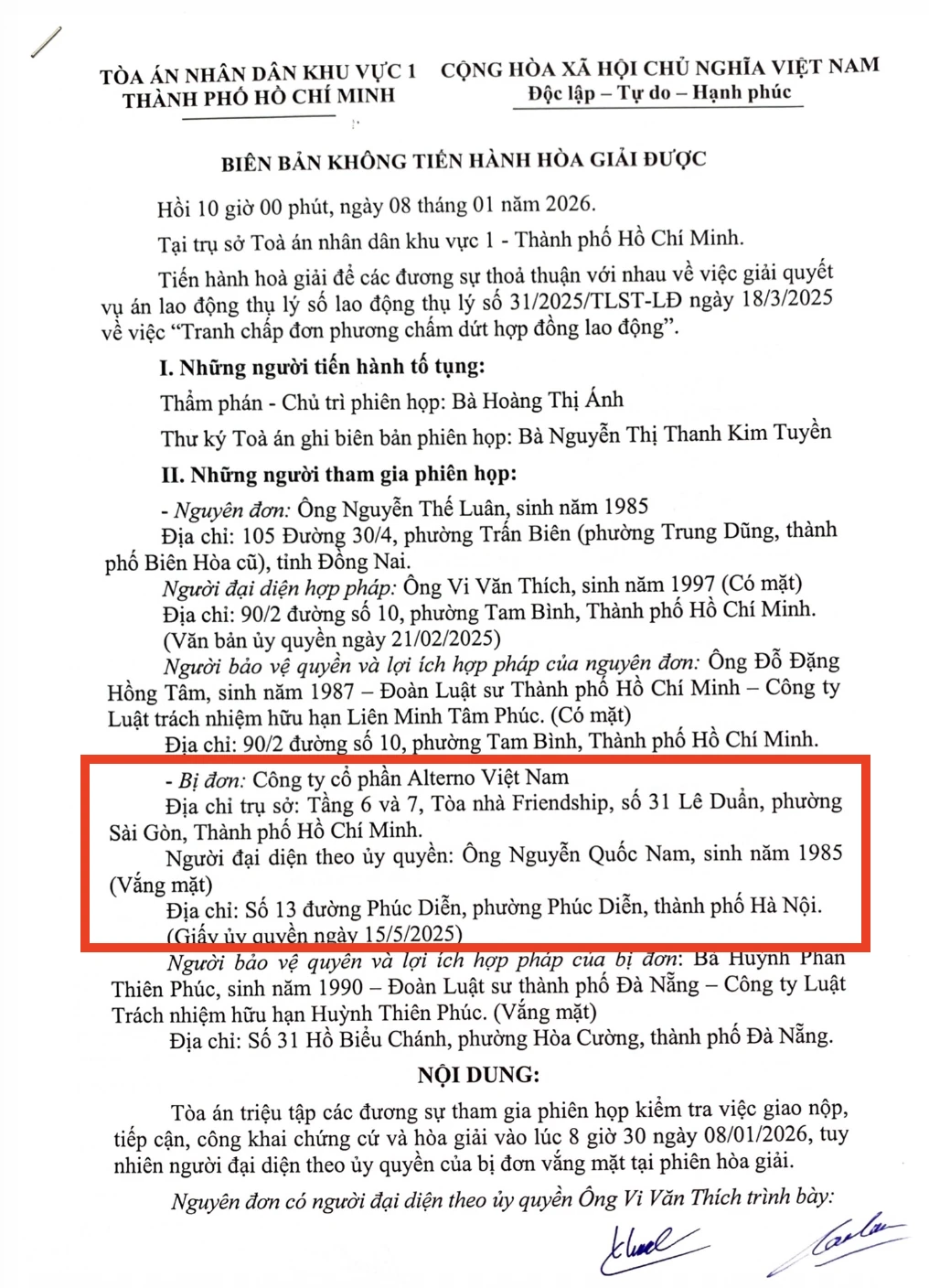
The significance of a non-appearance is easy to understate. A company that insists publicly that it holds documentation proving a "structured and fully documented separation" had, twice now, declined the one venue where that documentation could settle the matter. You do not avoid the referee when you believe you are winning.
These events from late 2025 to early 2026 set the stage for everything that followed: the full compilation of document inconsistencies in the Alterno lawsuit timeline (Part 19), and the discovery — in Part 20 and Part 21 — of what the dissolution attempt was clearing the way for. The fight continues, and the documented record speaks for itself.