Which AI Level Are You? (Why Most Are Stuck at Level 1 or 2)
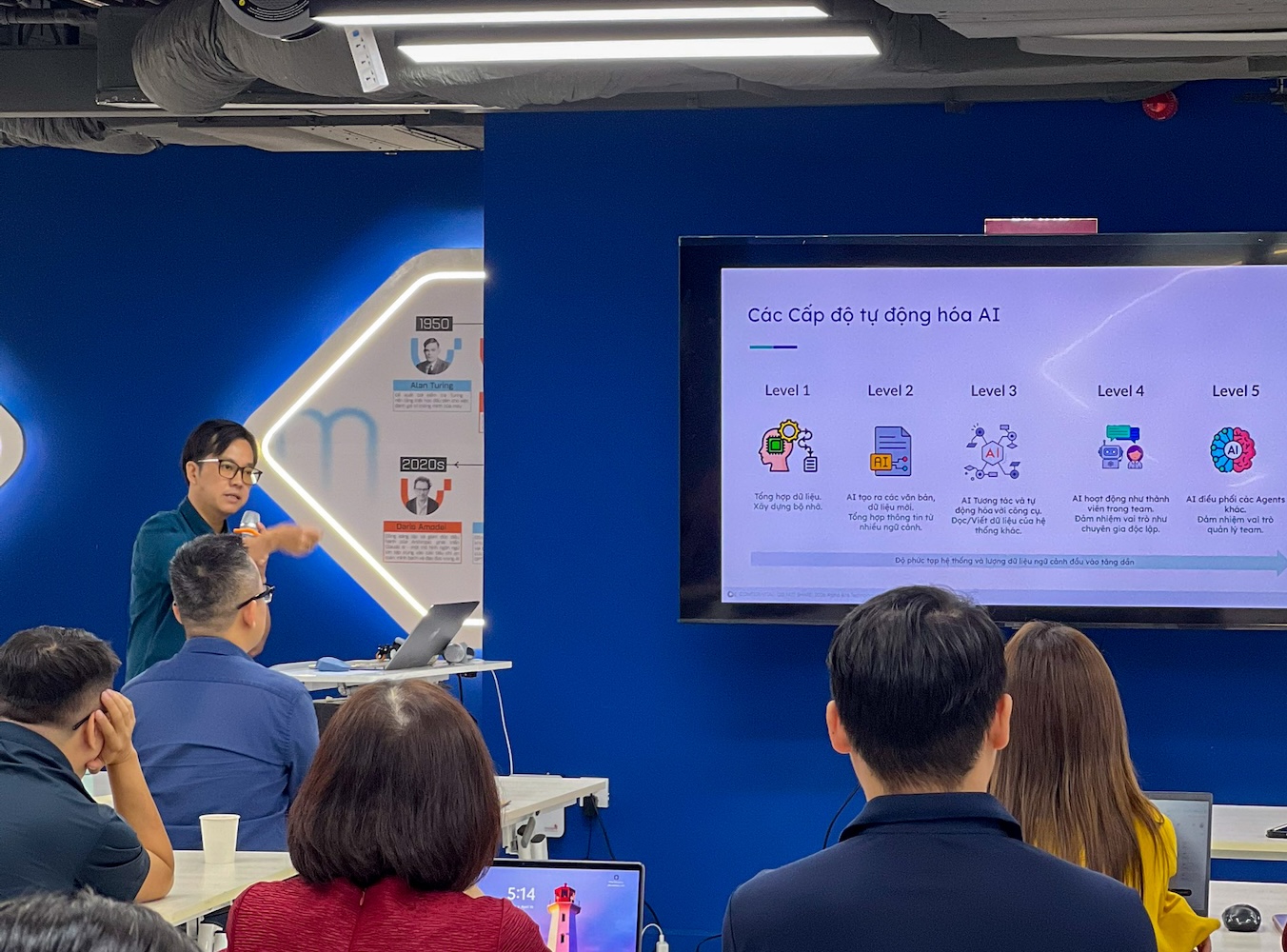
I shared this framework for the first time with an audience at our AI Application in Operations and Legal seminar.
It provides a clear way to evaluate AI adoption, especially for business leaders who say they are already using AI but have not yet seen measurable operational leverage.
Most teams operate around Level 1 or Level 2. They use AI as an assisted search engine, which is helpful, but they remain far from the leverage that appears at Levels 4 and 5.
Here is how the progression works:
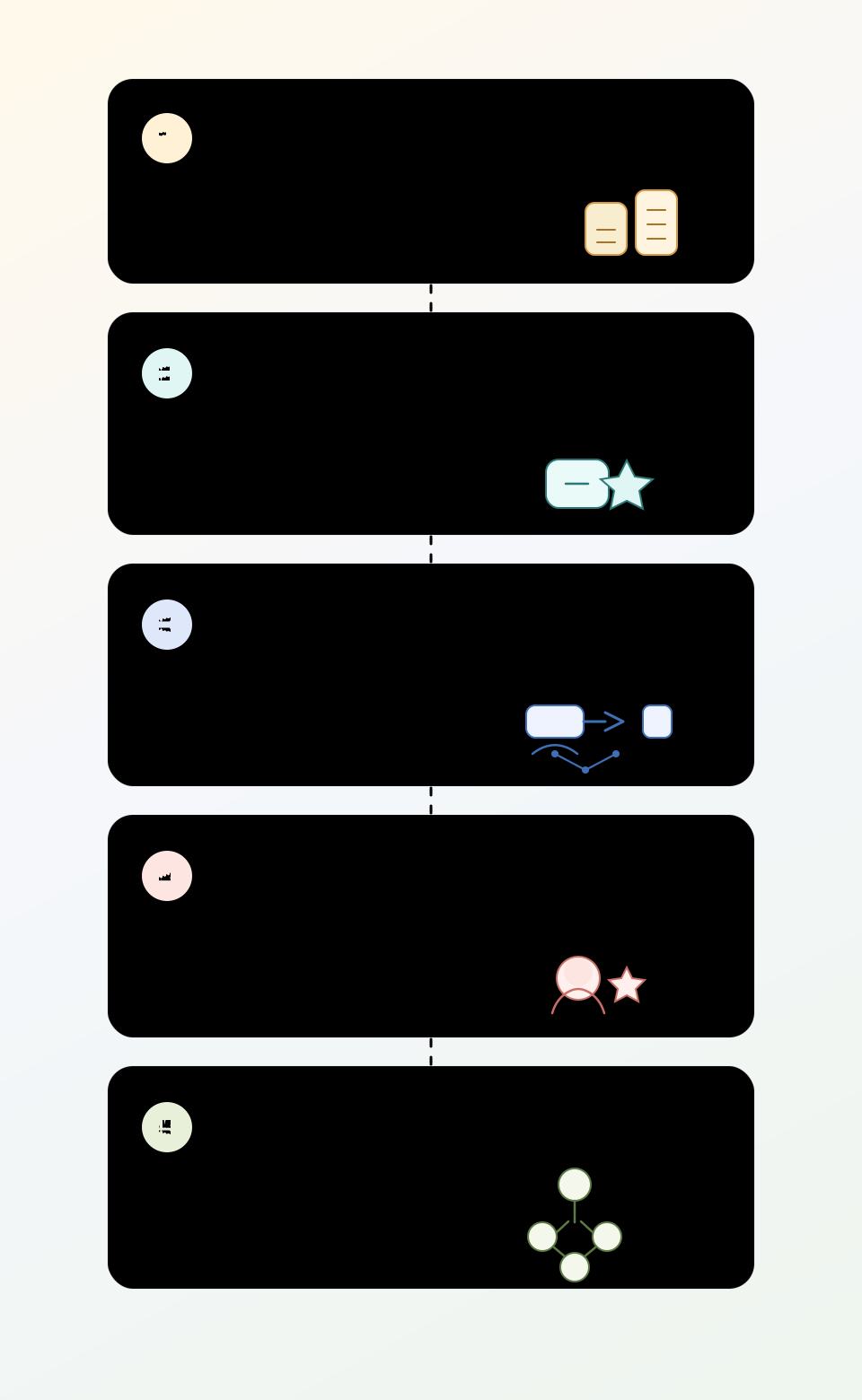 The framework moves from AI as memory to AI as orchestrator.
Level 1: The memory builder
If you upload PDFs, links, images, or notes into a chat window and ask the model to summarize them, you are at Level 1.
This stage centralizes unstructured internal knowledge (SOPs, policies, meeting notes, legal templates) into context the AI can reference. You are not automating processes yet; you are teaching the model your internal context.
Typical tools at this stage: NotebookLM, ChatGPT, Gemini, Grok, Perplexity.
This is a solid foundation. Most organizations should start here, recognizing that it remains assisted retrieval.
Level 2: Contextual generation
At Level 2, you move beyond retrieving information to generating new artifacts grounded in the context provided.
Common examples include:
- Drafting policy memos from internal guidelines
- Synthesizing multi-source reports
- Extracting structured themes from customer feedback
- Creating operational checklists based on historical templates
The interface may look identical to Level 1, but the output shifts from retrieval to synthesis. Many teams stop here and conclude they have completed their AI adoption, even though work still occurs inside isolated chat prompts.
Level 3: External system interaction
At Level 3, AI integrates with external systems.
The model reads from and writes to CRMs, spreadsheets, email systems, finance tools, or internal databases. It operates with defined skills (financial analysis, operational triage, interface drafting) inside connected workflows.
Standard protocols like Model Context Protocol (MCP) become important here to establish secure, structured access across services.
Adoption often slows down at this stage because copy-pasting is replaced by structured inputs, explicit permissions, API configurations, and defined business logic.
Level 4: The specialized team member
At Level 4, AI functions as a bounded specialist handling complete workflows within a defined scope.
Rather than using a single general assistant for everything, teams deploy specialized agents focused on dedicated tasks:
- Building and deploying landing pages end-to-end
- Qualifying inbound leads against explicit criteria
- Drafting initial compliance checklists
- Preparing structured briefing notes for decision-makers
Typical tools at this stage include Lovable, Google AI Studio, Bolt, and GitHub Copilot. The defining characteristic is that the agent operates autonomously within an established operational boundary.
Level 5: The AI orchestrator
At Level 5, one coordinator agent manages multiple specialized agents and automations to execute complex, multi-step operations.
During our workshop, I demonstrated an event-management pipeline where operational steps were coordinated across tools with human approval gates.
At this level, the system can:
- Generate the event workflow
- Verify incoming payment receipts against bank notifications
- Issue QR-code passes
- Manage attendee check-ins
- Synthesize post-event feedback into an executive summary
This eliminates manual data shuttling between disparate tools.
Representative orchestration tools include n8n, Node-RED, OpenClaw, Antigravity, Claude Cowork, and custom agent architectures.
Evaluating organizational maturity
Determining where a team actually operates comes down to workflow integration rather than model selection. If staff still manually copy and paste text between individual browser tabs, operations remain at Level 1 or 2 regardless of the model tier.
Model benchmarks and provider names will continue to evolve, but the lasting advantage comes from operational redesign. Level 5 begins when workflows are structured so software agents can reliably coordinate them end to end.